
Incline Ramp & Accessibility Calculator
Find the Perfect Ramp with Our Ramp Slope Calculator
How the EZ-ACCESS Incline Calculator Works
Getting the ramp length right matters more than most people expect. Too steep, and the ramp is harder to use and less safe. Too long, and it may not fit the space you have. The EZ-ACCESS wheelchair ramp slope calculator removes the guesswork: enter your rise and choose an incline ratio, and it returns the ramp length needed for modular ramps, wheelchair ramps, loading ramps, and portable ramps, and provides additional details such as slope and grade.
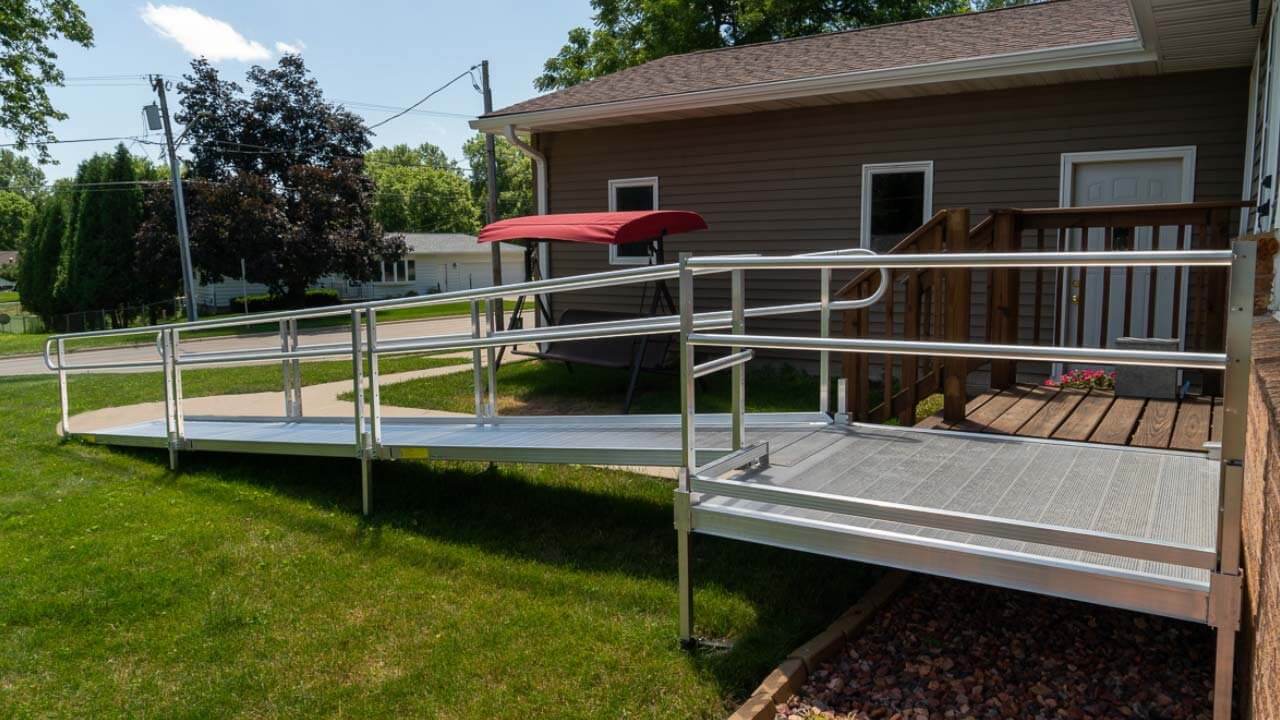
A Deeper Look at the EZ-ACCESS Incline Calculator
Our Incline Calculator can help ensure the ramp you’re considering will fit the incline requirements of the installation site. When using the Incline Calculator, you must select your ramp ratio from the following options: 1:6 1:8 1:10 (IRC Acceptable) 1:12 (ADA Standard)
The ADA Standard is a great place to start, but you can confirm the ratio standards with your city or local codes. After selecting the ratio, you’ll need to enter the rise. This is the distance from the top step or landing to the ground. After entering these numbers, the Incline Calculator will generate the required ramp length, along with the slope, and grade of the ramp. However, if the rise is greater than 30 inches, a platform may be required.

Understanding Your Results: Slope, Grade, and Run
Once you enter your numbers, the calculator returns three figures, and it helps to know what each one means before you choose a ramp.
The incline ratio describes the relationship between rise and ramp length and is typically expressed as a ratio such as 1:12, 1:10, and so on. It's the standard way ramp steepness is described in accessibility guidelines and product specs.
Slope measures the ramp's angle and is expressed in degrees. While the incline ratio shows the relationship between rise and ramp length, the slope provides the actual angle of the ramp. A steeper incline ratio results in a higher slope angle, while a gentler ratio produces a lower angle.
Grade expresses the same steepness as a percentage. A 1:12 slope works out to roughly an 8.3% grade. Some codes and product documents reference grade instead of ratio, so it's worth having both.
Run is the horizontal length of ramp needed to cover your rise at the selected slope. This is the number that tells you how much physical space the ramp will take up, from the base of the rise to the top landing.
Which Ramp Ratio Should You Choose?
The calculator gives you four ratio options, and each suits a different situation.
1:12 (ADA Standard). The most widely used ratio for wheelchair and mobility device access. One inch of rise for every 12 inches of ramp. This is the reference point built into the calculator by default, and the one to start from if the ramp needs to accommodate unassisted wheelchair use.
1:10 (IRC Acceptable). A steeper ratio permitted under the International Residential Code in specific circumstances. Shorter than 1:12 for the same rise, but confirm it's appropriate for the mobility device and user before choosing it over the ADA ratio.
1:8 and 1:6. Steeper still, and generally suited to equipment loading, ATV and motorcycle ramps, or short-distance applications rather than wheelchair access. These ratios trade length for steepness, so they only belong where the equipment or use case can handle the incline safely.
Whichever ratio you're considering, check it against your mobility device's owner's manual and any local code requirements before finalizing your ramp.

What if Your Rise Is More Than 30 Inches?
If your calculated rise is greater than 30 inches, a platform may be required. This usually means breaking a single long ramp run into shorter sections joined by a level platform, which keeps the incline manageable and gives users a resting point partway up. If your results fall into this range, it's worth speaking with our team about a modular configuration rather than a single continuous ramp.
Frequently Asked Questions
What is the ADA standard ramp slope ratio?
The ADA standard is 1:12, meaning one inch of vertical rise for every 12 inches of ramp length. This is the default ratio in the calculator above, and the one most commonly used for wheelchair accessibility.
How long does a ramp need to be for a 24-inch rise?
At a 1:12 slope, a 24-inch rise needs about 24 feet of ramp. Using a steeper ratio like 1:10 would shorten that, but always confirm the steeper option is appropriate for the equipment and user first.
Can I use a steeper ratio than 1:12 for a portable ramp?
Sometimes, but it depends on the equipment and the person using it. Refer to your mobility device's owner's guide before choosing a ratio steeper than 1:12, and never exceed its recommendations.
Do I need a platform if my rise is more than 30 inches?
Often, yes. Rises beyond 30 inches typically call for a platform to break up the run, which keeps the ramp usable and gives a level resting point. Contact our team if your calculation puts you in this range.
What's the difference between incline, slope, and grade?
Incline is typically expressed as a ratio such as 1:12 or 1:10. Slope measures the ramp's angle and is expressed in degrees (about 4.8° for 1:12), while grade is expressed as a percentage (about 8.3% for 1:12). Whether expressed as a ratio, degrees, or a percentage, each measurement provides a different way to describe the same ramp steepness.